Quick answer
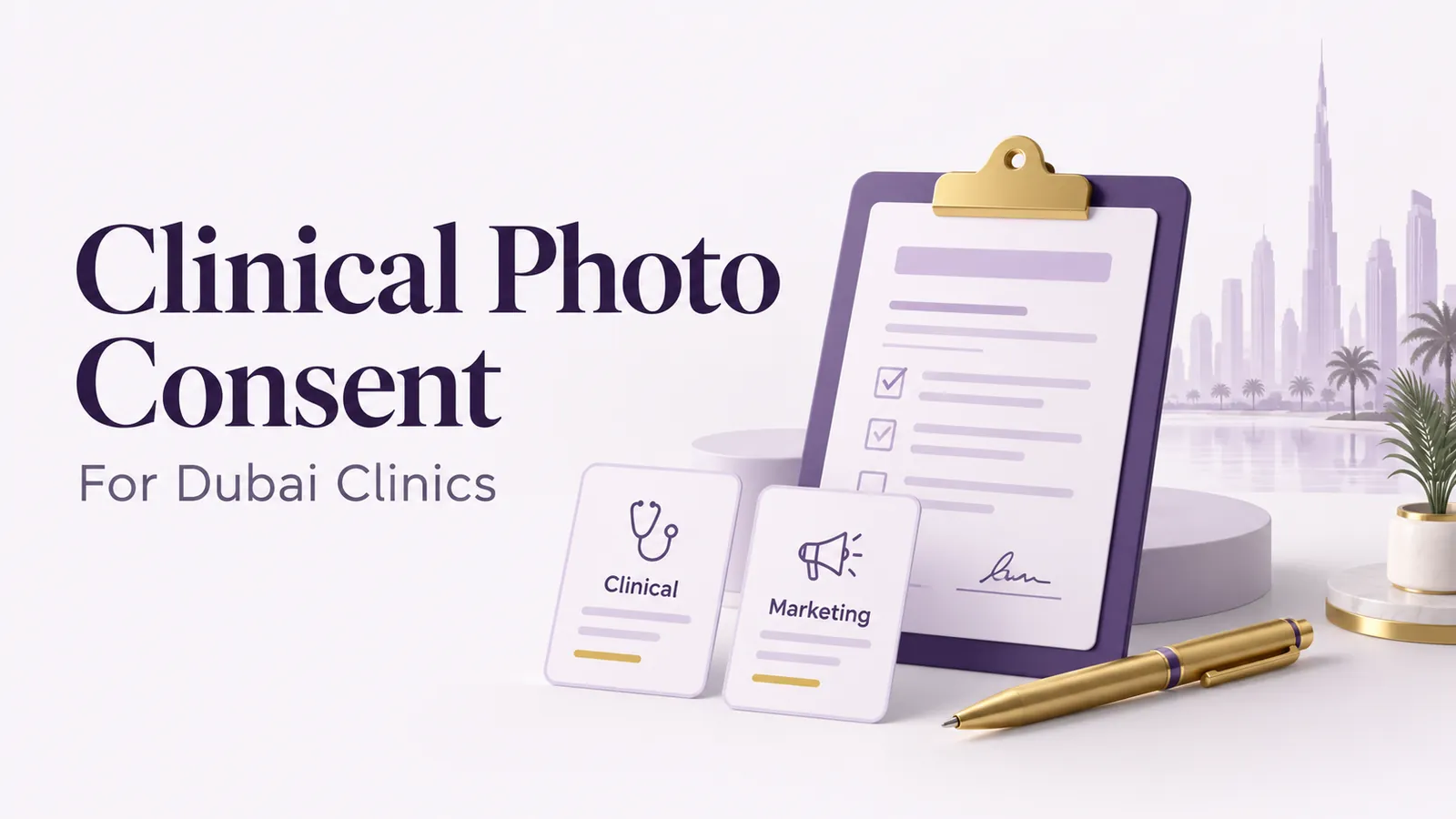
For a Dubai clinic, the photo consent form should explain why photos are taken, who can view them and how they may be used outside the patient’s medical record. Record marketing permission separately. Before publishing any patient photo, check that the permission covers that photo, the intended use and the planned publication period.
A patient agrees to photographs during a consultation. Weeks later, someone selects a before-and-after pair for Instagram. The clinical team remembers the conversation, but the marketing team cannot find a clear record of what the patient allowed.
A repeatable consent workflow prevents this handover gap. This checklist is for plastic surgery, dermatology, medical spa, wound care and pediatric surgery teams in Dubai. It is a practical process to review with your clinic’s responsible adviser, not a ready-made legal consent form.
Separate the reasons for taking and using photographs
Start with the intended use. Photographs taken for assessment, treatment planning or follow-up are part of a clinical workflow. A public website, paid advertisement, social post, teaching presentation or private consultation gallery may involve a different audience and purpose.
Do not turn a recorded clinical photography discussion into assumed permission for every later use. Explain each proposed use in language the patient understands. If the clinic offers different choices, record the choices individually rather than hiding them in one broad statement.
DHA’s Standards for Medical Advertisement Content on Social Media require documented consent for people shown in advertising. Section 6.10 ties the consent to its subject and permitted period. Section 9 addresses written consent for patient images. Those advertising requirements should be checked separately from the clinical care process.
What should your clinic’s photo consent record cover?
Use these questions when reviewing your forms and staff instructions. Your clinic should decide the appropriate wording and legal basis for each use.
- The patient: How will staff connect the consent to the correct patient record?
- The photographs: Which images, visits or image sets does the choice cover?
- The purpose: Is the proposed use clinical care, a consultation example, teaching or marketing?
- The audience and channel: Who may see the images, and where might they appear?
- The time period: When does the permission begin and end, where applicable?
- The patient’s questions: Who explained the choice and how was understanding checked?
- Changes: How can the patient contact the clinic to change a decision, and who handles that request?
- The record: Where are the signed form, version and associated photographs stored?
Use a five-step handover from consultation to publication
1. Check the patient record before capture
Confirm identity and review the purpose of the photography before taking images. Use the clinic’s approved explanation and form. Do not ask a photographer or receptionist to guess whether a previous treatment consent covers a new use.Confirm identity and review the purpose of the photography before taking images. Use the clinic’s approved explanation and form. Do not ask a photographer or receptionist to guess whether a previous treatment consent covers a new use.
2. Save the decision with the photographs
Keep the form and its context retrievable from the patient record. Staff need to identify which image set it covers. A separate spreadsheet saying only “yes” can lose the purpose, expiry and limitations that made the decision meaningful.
3. Restrict who can select or export images
Give each staff member an individual login. Assign access according to their work and train them on the difference between a clinical record and a marketing selection. Review CureCast staff access controls when setting up your clinic workflow.
4. Check permission again before use
Before an image leaves the clinical record, check the intended channel against the documented permission. Confirm that it is still current and that no change request is awaiting action. Removing a patient’s name does not automatically make a distinctive clinical photograph anonymous.
5. Record approval and respond to changes
Assign a staff member to approve the final photos, captions and where they will be published. Keep a record of each photo’s use. If a patient changes or withdraws permission, make sure staff know who will review the request and arrange any needed changes across the clinic’s website, social media and other marketing channels.
What about children and guardian permission?
Before taking or using a child’s photos, Pediatric surgery teams should confirm who can legally give permission and what documents your clinic needs. Explain why the photos are needed and who will see them, using language the parent or guardian and child can understand. Do not assume that an adult accompanying the child can approve every use.
The DHA social media standard calls for verifiable parental consent before collecting, using or sharing a child’s information. Check the standard and your clinic’s consent policy before using a child’s photos outside the patient record.
How CureCast fits Dubai consent workflow
CureCast provides patient consent forms and records marketing permission against the patient. During the demo, check how easily staff can find a patient’s signed consent form, see how their photos may be used and choose photos covered by that permission. Set up the forms to follow your clinic’s approved consent process.
Consent records also contain patient information. Discuss account hosting, support access and the Data Processing Agreement before adding real records. See clinical photo management for Dubai and UAE clinics for the UAE deployment and onboarding process, and the DHA photography guide for the wider context.
Frequently asked questions
Is a verbal “yes” enough for a Dubai social-media advertisement?
The DHA standard requires written, documented consent for the patient images used in social-media advertising. Keep a retrievable record of the specific permission before a post is approved.
Can the marketing team use any photo stored in the app?
Storage in a clinical photo app does not establish marketing permission. Staff should check the recorded purpose, channel, period and any limitations for the selected photographs.
Should our form promise that published images can always be removed everywhere?
No. Once a photo is public, other people may copy, download or share it. Your clinic may not be able to remove every copy. Explain this clearly in the consent form, and ask your clinic’s adviser to review how you describe and handle requests to change or withdraw permission.
Official references
- DHA Standards for Medical Advertisement Content on Social Media, Version 1.1, issued 3 August 2022: sections 6.10, 8.1.12 and 9 cover documented consent, its purpose and time limits, parental consent for children under 18, and the use of photos and videos.
- DHA Policy for Data and Health Information Protection and Confidentiality, issued 10 August 2022: sections 4.6, 4.8 and 4.13 cover patient rights, staff access and circumstances where information may be processed without consent. This checklist is a practical guide, not a complete explanation of those rules.
Sources checked October 31, 2026. Check the current requirements applicable to your clinic before finalizing forms or publishing images