Clinical Photo Management Software Find Any Patient Photo in Under 3 Seconds
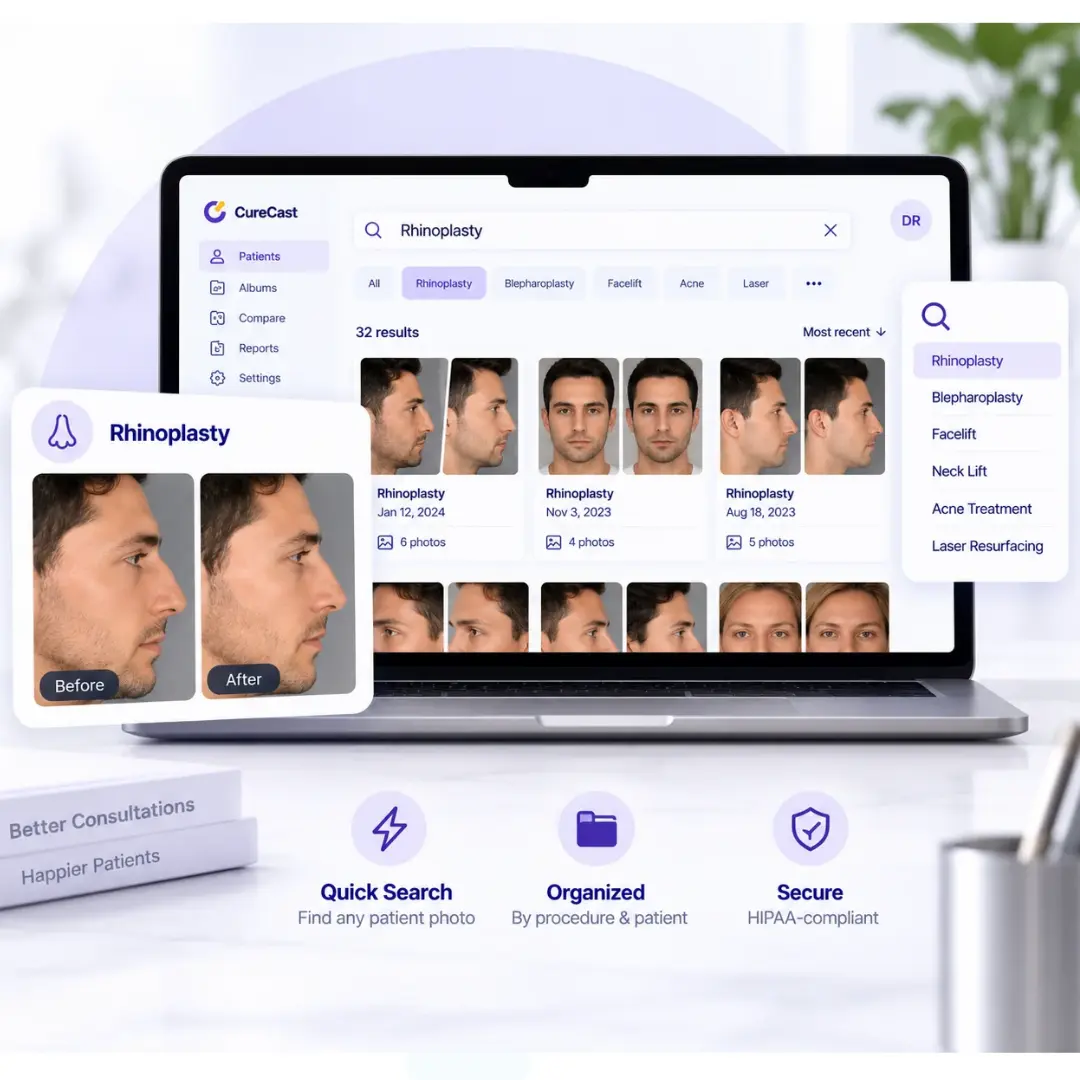
Everything your practice needs, in one photo system.
CureCast replaces nine separate tools and manual workflows with one system built specifically for clinical photo management.
Practice Photo System
Built to protect patient photos and records.
CureCast combines seven security controls to manage who accesses patient information, what activity is recorded, and how data is protected at rest and in transit.
- Staff Access Control : who can access what
- Audit Trail : what activity is recorded
- Device Management : which devices have CureCast access
- Session Timeout : how inactive sessions are handled
- Encryption : how patient records and clinical photos are protected
- Confidential Patient : invisible to unauthorised staff
- Multi-Clinic : how access stays scoped to a single clinic location
Practice Security Status
Trusted by clinics globally


Want to hear from more practices using CureCast? Read more customer reviews →
You have the photos. You just can’t find them when it matters most.
These are the moments where the wrong photo system costs your practice patients, compliance, and time every single day.
Four capabilities that make CureCast the clinical photo app aesthetic practices trust
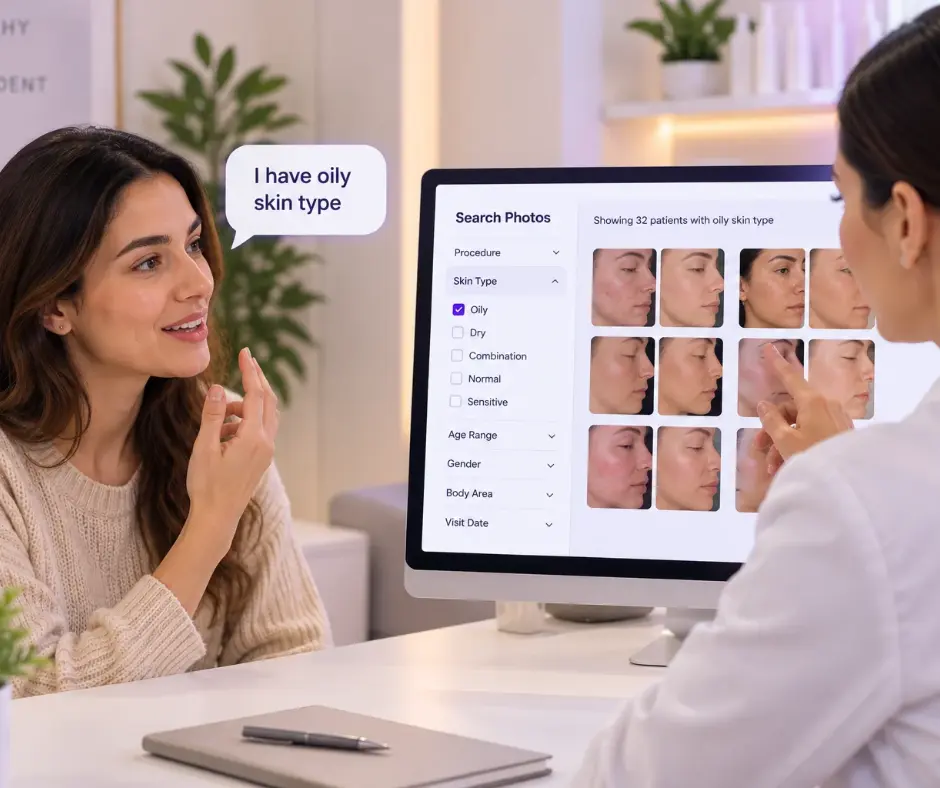
Find any clinical photo in under 3 seconds by procedure, diagnosis, patient name, or phone number
Every photo captured in CureCast is automatically tagged at the moment of capture by procedure name, diagnosis, body area, patient name, phone number, and patient ID. No manual filing. No folders. No searching. During a live consultation, one search brings up every relevant photo instantly.
- Search by any procedure rhinoplasty, Botox, CoolSculpting, laser, acne, rosacea
- Search by patient name, phone number, diagnosis, or patient ID simultaneously
- Tag one photo under multiple procedures appears in all relevant searches
- Works on iPhone, Android, iPad, and desktop. Results appear in under 3 seconds on any device mid-consultation
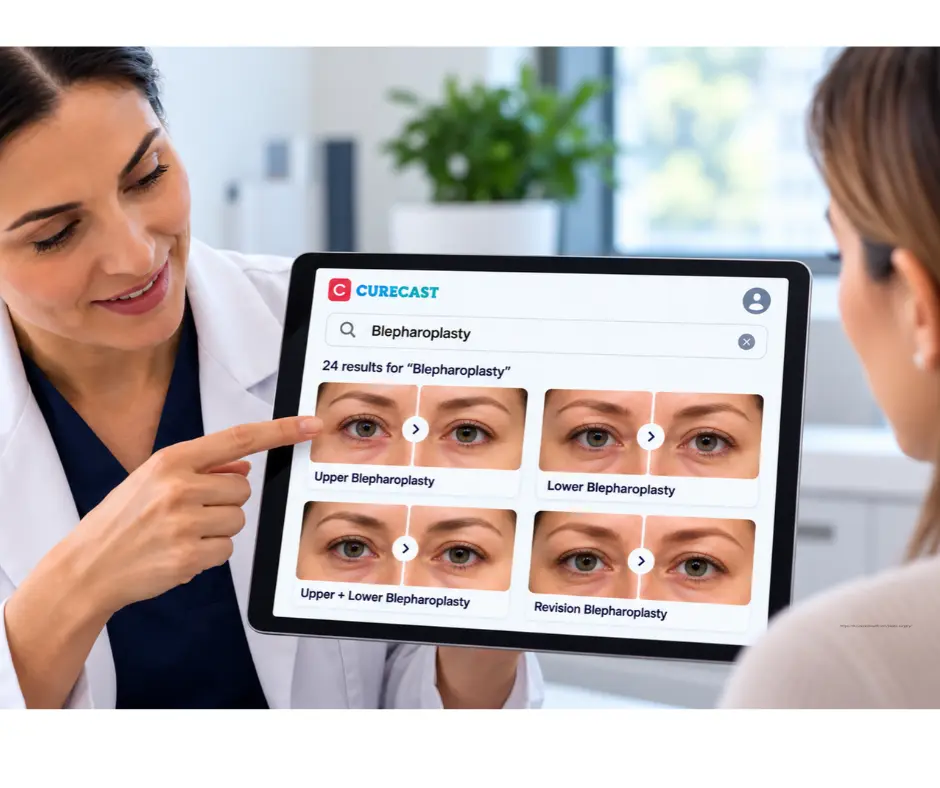
Build before/after comparisons instantly, add your watermark and share compliantly
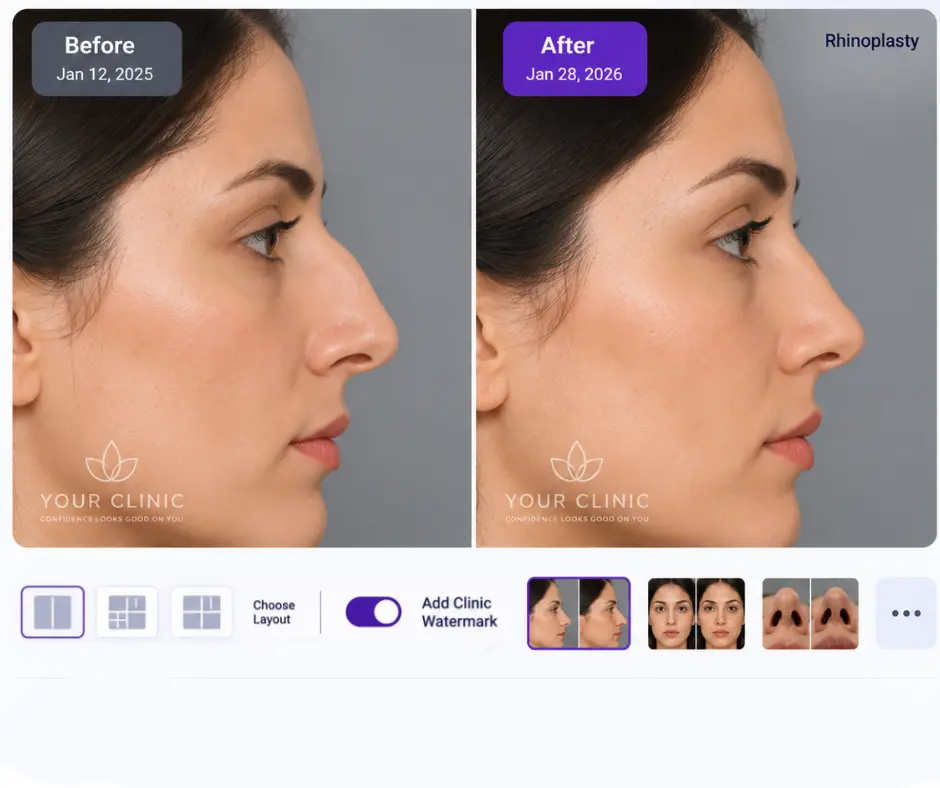
Select any two photos from any two visits, whether they’re one week or two years apart. CureCast creates a side-by-side or overlay comparison in seconds. With TrueAlign, you can match the framing of follow-up photos to the original image, helping create more consistent before-and-after comparisons over time. Add your clinic watermark and logo, then share directly via WhatsApp without saving the patient’s number to personal contacts, or share to Instagram directly from the app.
- Instant side-by-side and overlay comparison from any two visits
- Add clinic watermark and logo before sharing professionally branded every time
- Share directly to Instagram, Facebook, WhatsApp from within CureCast
- WhatsApp sharing without saving client number to personal contacts
Consistent clinical photos, from every device and every visit
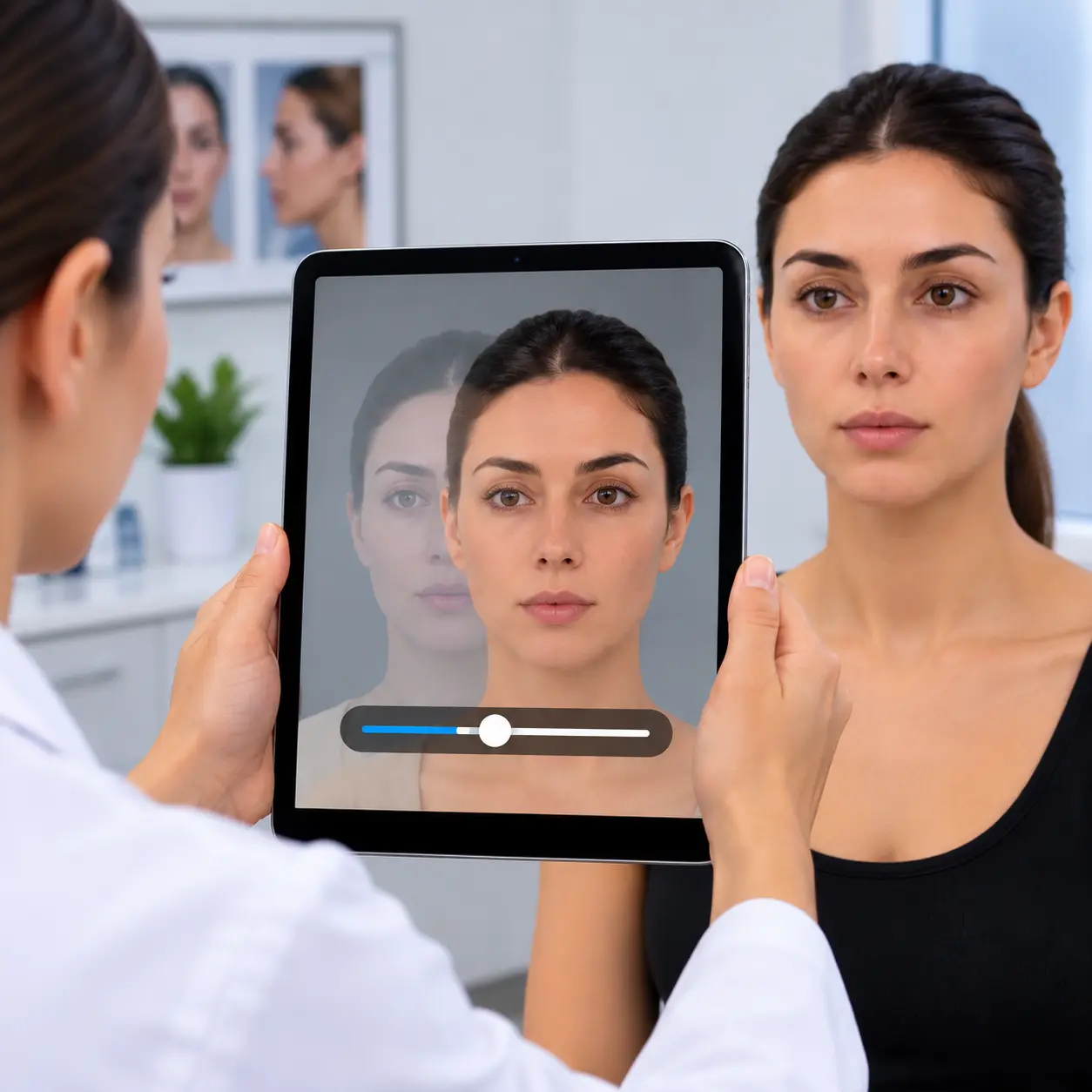
Good clinical photo management is not only about storing and finding photos. It starts with taking them consistently. If each photo is taken from a different angle or distance, your comparisons become less clear, no matter how well the photos are organized.
TrueAlign Match shows the patient’s earlier photo on the live camera screen as a faded ghost image or a simple outline. You can align the new photo with the earlier view to help keep follow-up photos consistent.
- Shows you when the camera is tilted up or down
- Choose up to 15 earlier photos from the patient’s file as a guide
- Use photos taken before you started using TrueAlign Match
- Works on both iPhone and iPad
Photos captured on iPhone and iPad are stored consistently within CureCast. So if a patient is photographed on a different device at their next visit, you can still use TrueAlign Match to help recreate the earlier view. There are no filters and no retouching, so every photo in your library is a true record of the patient.
Show new clients exactly the results they want before they book
A new client considering CoolSculpting describes their target area. Within seconds you are showing them your results filtered by body area such as the abdomen, flanks, inner thighs from clients with similar body types. They stop asking if you get results. They can see yours. The consultation converts itself.
- Build treatment-specific galleries e.g. CoolSculpting, Botox, laser, skin tightening
- Filter by body area so clients see results matching exactly where they want treatment
- Use combination treatment galleries to cross-sell complementary treatments naturally
- Every before/after auto-filed into the right treatment gallery as you work
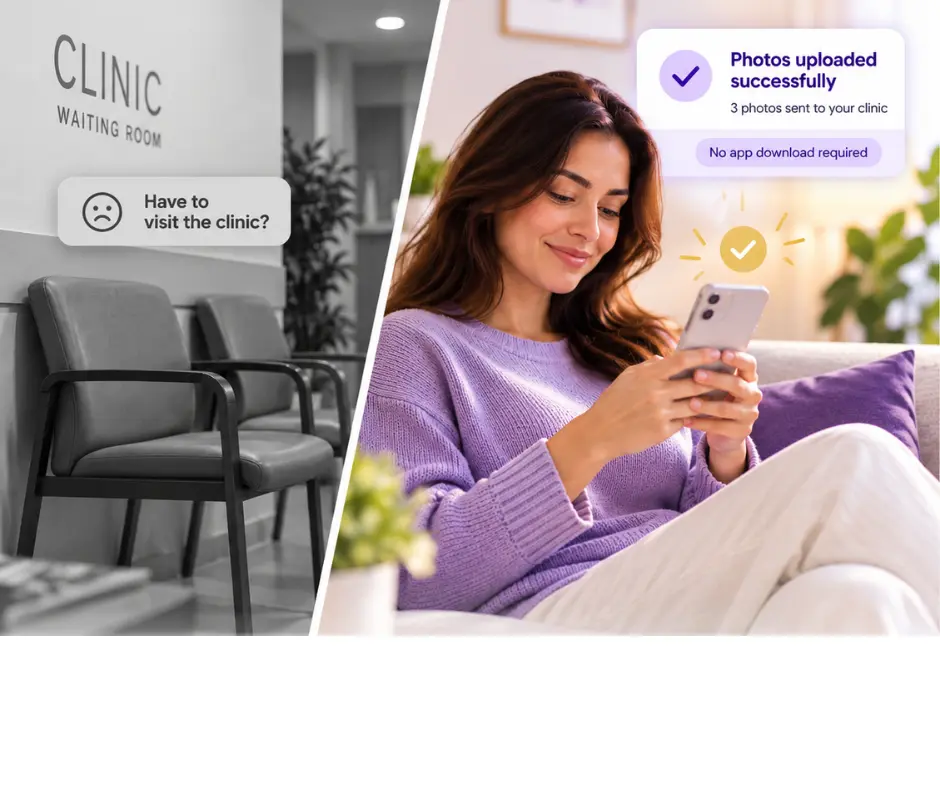
Collect post-operative photos, videos, and documents from patients who never come back for follow-up
Send a secure upload link directly from CureCast, if the patient’s phone and email are saved, it sends automatically via WhatsApp or email in one tap. The patient uploads photos, videos, or documents from their phone without installing any app. Files auto-file to their chart. You receive an instant push notification.
- Secure link generated and sent in one tap – WhatsApp or email
- Patient uploads without installing any app – frictionless experience
- Photos auto-file into client chart on the upload date
- Photos, videos, and documents all accepted
Is there a clinical photo app that works on Android?
Very few. Most clinical photography apps in the aesthetic market are iOS only, which leaves any practice running Android phones or tablets without an option. CureCast runs on Android phones and tablets, on iPhone and iPad, and in any desktop browser, using the same account and the same patient library across all of them.
If you have looked at this category before and concluded that you would need to buy iPhones to use clinical photo software, that conclusion was reasonable. RxPhoto is iOS only. TouchMD Snap is iOS only. Canfield is capital imaging hardware rather than an app at all. For a clinic with an Android fleet, the shortlist is genuinely short.
What works on Android, and what does not
Android is not at full parity with iOS, and we would rather you knew that before a demo than after a purchase. Three capabilities are currently iOS and desktop only. Everything else behaves the same way on both platforms.
| Capability | Android | iPhone & iPad | Desktop browser |
|---|---|---|---|
| Capture patient photos in the app | Yes | Yes | No |
| Photos never saved to the device camera roll | Yes | Yes | Yes |
| Search the photo library by procedure, name or date | Yes | Yes | Yes |
| Build and show before-and-after comparisons | Yes | Yes | Yes |
| Consultation albums by procedure | Yes | Yes | Yes |
| Secure remote upload link for patients | Yes | Yes | Yes |
| Share securely by WhatsApp, email or link | Yes | Yes | Yes |
| Encryption | Yes | Yes | Yes |
| Device management | Yes | Yes | Yes |
| Guided capture overlays for image consistency | Not yet | Yes | n/a |
| Photo annotation and markup | Not yet | Yes | Not yet |
| Staff management and permissions | Not yet | Yes | Yes |
| Audit trail | Not yet | Yes | Yes |
| Reauthentication | Not yet | Yes | Yes |
Two of those three gaps matter little in practice, because staff management and annotation are administrative and clinical-review tasks that are almost always done sitting at a desk rather than standing in a treatment room. Any authorised administrator can handle them from a desktop browser on the same account.
The third is worth thinking about properly, and it is the reason for the recommendation below.
How to set up a mixed Android and iOS clinic
Guided capture overlays let the person taking the photograph align the new image against the previous one, which is how before-and-after pairs end up matching on angle, distance and pose. That consistency is not just an aesthetic preference. Ahpra requires before-and-after images to be as similar as possible in lighting, camera angle, background, framing, exposure and posture. Dubai's DHA requires the same patient and the same lens. Ontario's CPSO requires consistent lighting, pose, technique and setting.
So the honest recommendation for a practice that publishes before-and-after images in those markets is this: put one iOS device in the photography room and run Android everywhere else. A single iPad handles the capture where consistency is regulated, while Android phones, tablets and desktop browsers handle consultation, search, sharing and review across the rest of the clinic. Everyone works from the same patient library regardless of which device they picked up.
If your practice photographs for clinical records rather than for advertising, the overlay gap matters far less and Android alone is a perfectly workable setup.
Why we publish this table. Platform parity is the question every Android practice asks and almost no vendor answers, because the honest answer is usually "we do not support Android at all." Ours is that we do, with three named exceptions we are working on. You should be able to see that before you book a demo rather than discover it in week two. Feature availability last reviewed September 2026.
Why clinic choose CureCast
Get Started With CureCast

See How CureCast Fits Your Practice
Discuss how CureCast fits into your clinical photo workflow, from capturing and organizing patient photos to securely managing them across your practice.
Prefer email? [email protected]