Quick answer: Before a Dubai aesthetic clinic posts before and after photos on Instagram or other social media, check three things. The patient must have given written consent for that exact post. The photos must be of the same person, taken with the same lens and not edited, and the post must include the required statement about results and risks. Your medical director, who is accountable for the clinic’s social media content, should approve the final post. This follows the Dubai Health Authority (DHA) standard for medical advertising on social media.
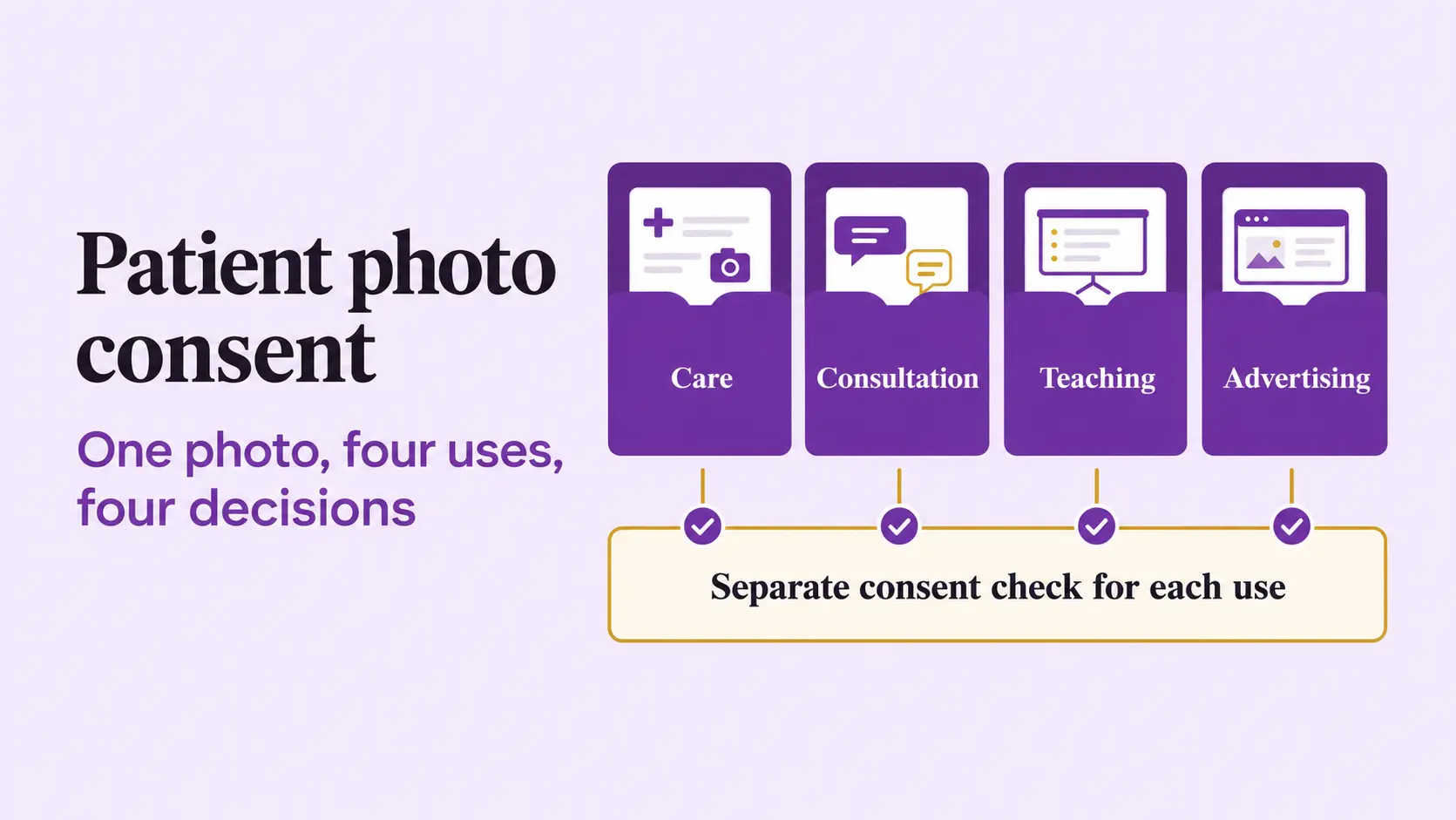
A clinic may be allowed to use a before and after photo in a consultation, but not allowed to post it on Instagram.
The patient may have agreed to clinical photos. That is not an agreement to an advert.
The photo may have been edited when the post was designed, for example cropped, brightened or smoothed. Even a small edit can break the DHA rule.
The post must also include a statement about results and risks. If this statement is hard to read, the post does not follow the DHA rule.
This article explains how to check before and after photos before posting, for clinics licensed by the DHA in Dubai. For other countries, read our guide to before and after photo advertising rules. Check other applicable authorities and platform requirements separately.
Dubai before and after photos: start with the original files and written consent
Save each original clinical photo with the right patient and the right visit. Marketing may ask for a before and after example. Do not move the whole patient record into a shared marketing folder. Choose only the few photos you plan to use, and share only those. For a practical way to organize before and after photos in a Dubai plastic surgery clinic, file each original under the patient’s visit so staff can find it when a comparison is requested.
Check the DHA social media advertising standard against the patient’s consent. The DHA standard has three rules about consent. First, the consent must be written and kept on record. Second, the consent form must follow the DHA Standards for Patient Consent and Managing Health Records. Third, the consent only covers the purpose it was asked for and the time period it was given for. So your staff should be able to show, for each patient, which photos, what purpose and what time period the consent covers.
Covering the patient’s name, cropping the eyes or hiding part of the face does not remove the need for consent. People may still recognise the patient from the whole photo or from the caption. The DHA standard also does not allow patient identifiable details in the post, so do not include the patient’s name or other personal details.
Use our Dubai clinical photography consent checklist to review what staff should record when asking patients for permission to take or use photos.
Check the before and after photos against the DHA standard before design
The DHA standard says before and after photos should be of the same person, taken with the same lens, with no Photoshop or similar editing. So your clinic needs a clear, repeatable way of taking photos, and the original files should be reviewed before anyone designs a post for marketing.
- Confirm both photos show the same patient and the same treatment.
- Check the visit dates match what the caption says.
- Check the lens, distance, position and lighting against your clinic’s standardized before and after photography setup.
- Check that no filter, retouching or editing has been used.
- Keep the original photos easy to find in case anyone questions the post.
If the photos do not meet these checks, do not edit them to make the result look better. Ask the clinical team for a different example that the patient has agreed to use.
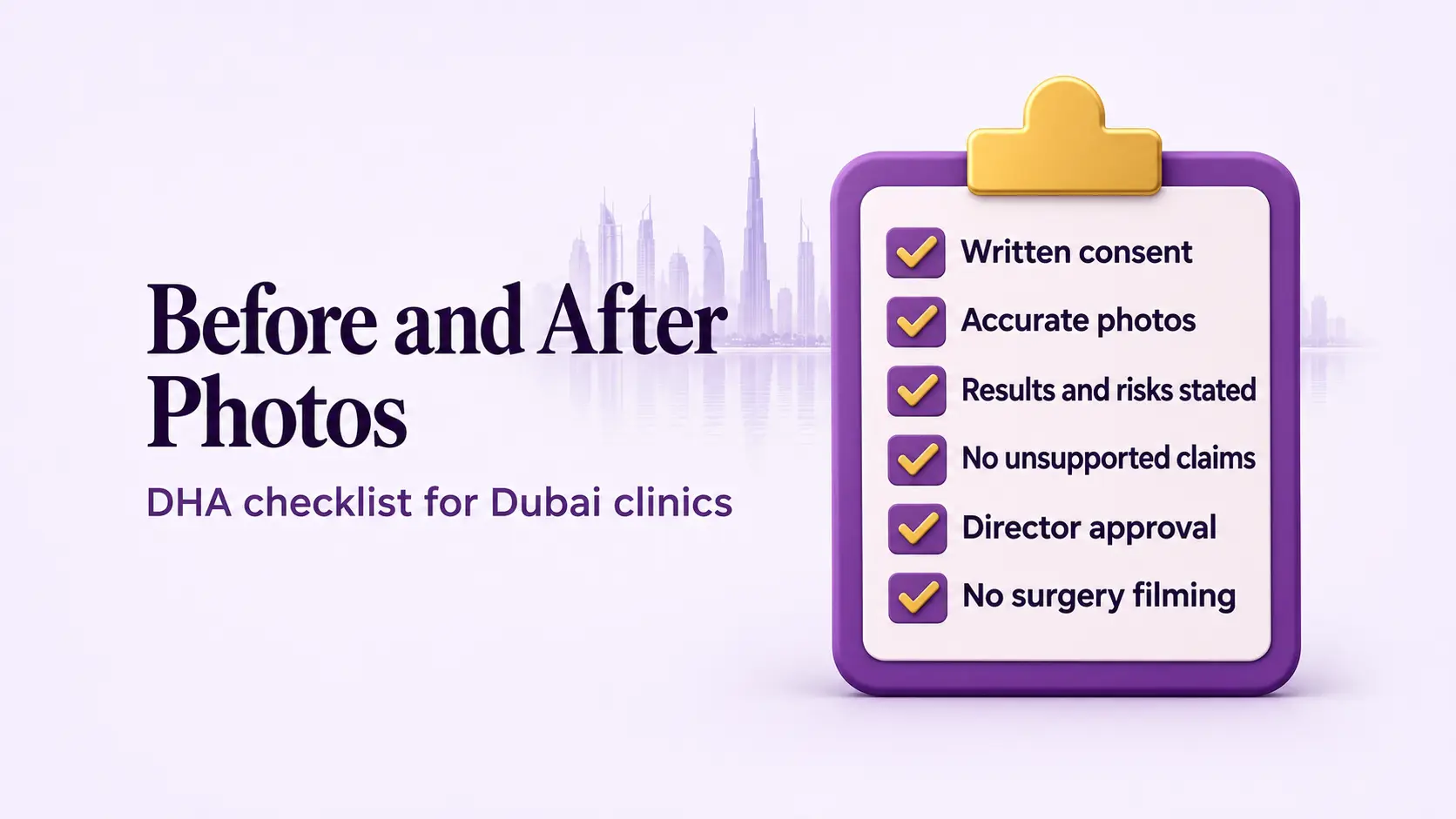
DHA approval checklist for every before and after social media post
Use this checklist for every before and after post. Tick each box your clinic can honestly say yes to. Any box you cannot tick means the post is not ready. Items marked “good practice” are not written in the DHA standard, but they help you show exactly what was approved. See how CureCast patient consent forms are kept with the patient record.
1. Written patient consent matches the use
2. The before and after photos show the case accurately
3. The results statement and risks are easy to read
4. The caption makes no promises you cannot support
5. The medical director’s approval is recorded
6. Do not film or live stream surgery
How CureCast helps Dubai clinics manage before and after photos
CureCast’s before and after photo management tools help teams retrieve patient photos and prepare comparisons. Keep the clinical originals, consent review and approved marketing selection connected in your clinic’s process. CureCast does not decide whether a particular advertisement meets every rule.
For UAE hosting, see clinical photo management software for Dubai clinics. For the broader consent and storage discussion, read the DHA clinical photography guide.
If your team is reviewing where it keeps the original images, see our guide to patient photo storage and UAE data residency.
Frequently asked questions
Can we use the same patient consent for any future social media post?
No. The DHA standard says consent only covers the purpose it was requested for and the period it was granted. Do not assume one form covers every future post.
Can a results disclaimer fix misleading before and after photos?
No. The DHA standard requires a results and risks statement, but it does not replace the other rules. Before and after photos must be of the same person, taken with the same lens and not edited, and misleading claims are not allowed. The statement must be the same font size as the rest of the post.
Do the DHA rules apply to every UAE clinic?
No. This checklist is based on the DHA social media standard, which applies to DHA-licensed clinics. Clinics under other authorities, including Abu Dhabi or Dubai Healthcare City, should confirm the rules that apply to them.
Reference
DHA Standards for Medical Advertisement Content on Social Media, code DHA/HRS/HPSD/ST-21, version 1.1, issue date 03/08/2022 (as printed on the document). Relevant sections: 6.10, 6.11, 7, 8.1.12 and 9, and Appendices 1 and 2. Source checked November 16, 2026. Confirm applicable current requirements before publication.